James Titus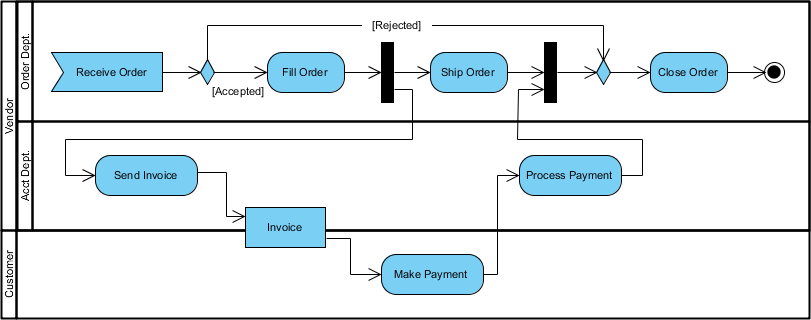
Understanding complex system behaviour is a little like navigating a sprawling railway network. Trains diverge, converge, pause, accelerate, and sometimes wait for parallel tracks to clear before proceeding. This is exactly how intricate workflows behave inside software systems, business operations, and enterprise decision environments. Instead of describing a business analyst in the traditional sense, imagine them as expert railway controllers who interpret signals, switches, and tracks to choreograph smooth movement across the network. Unified Modelling Language (UML) Activity Diagrams serve as their master maps, revealing how processes branch, reunite, evaluate conditions, and adapt to shifting operational realities.
Mastering advanced flow control in these diagrams transforms static visuals into dynamic stories that capture the pulse of non-linear systems.
Forks and Joins: Splitting Paths Like Rivers in Motion
A fork in an activity diagram behaves like a river that splits into several fast-moving streams. Each stream carries a different task, flowing independently toward its destination. Forks are essential when parallelism is required, and they allow systems to multitask in real time. Whether it is simultaneous verification checks or concurrent background operations, forks introduce a sense of momentum into the workflow.
Joins, in contrast, are where these streams converge again. Just as tributaries reassemble into a single river before reaching the ocean, joins wait patiently until all necessary activities report completion. Only then does the next stage unfold. This orchestration ensures that complex operations proceed only when the ecosystem is fully ready.
In advanced modelling environments, many professionals deepen their understanding of these patterns through structured learning, such as those who pursue business analyst training in bangalore, where real-world workflows often require mastering these subtle control structures.
Decisions: The System’s Way of Listening and Choosing
Decisions in an activity diagram resemble gates on a forest trail. At each gate, the system pauses briefly to evaluate what lies ahead. Should it turn left, right, or stay on the current path? Decisions are powerful because they respond to conditions, thresholds, and contextual cues.
A decision node does not merely split the path. It interprets data. It reacts to uncertainties. It introduces intelligence into the flow by making the diagram adapt based on inputs. While the notation is simple, the storytelling behind it can represent everything from customer journey variations to system-level policy enforcement.
These decisions breathe life into diagrams, helping teams envision how logic branches and how the organisation’s digital machinery responds to dynamic realities.
Merges: Quiet Intersections That Reunite Diverging Paths
Where decisions create branching, merges gently bring diverging paths together again. Picture a hiker finding several trails that eventually reunite at a common resting point. This is the essence of merges. They do not wait for all paths to arrive. Instead, they accept whichever path reaches them first. This ability to reunify the flow without dependency makes merges ideal for optional activities or exception-handling patterns.
In complex models, merges keep the diagram clean, flexible, and responsive. They offer a simple mechanism for representing workflow variations without complicating the broader visual structure.
Synchronisation and Flow Integrity in Larger Systems
As workflows scale, maintaining integrity becomes challenging. Activity diagrams with multiple forks, layered joins, nested decisions, and recurring merges start to resemble intricate orchestral compositions. Every instrument must play in harmony. One mistimed note can disrupt the entire performance.
Advanced practitioners focus on:
- Ensuring that each fork has a corresponding join
- Avoiding deadlocks where one branch waits endlessly
- Naming nodes clearly to prevent ambiguity
- Keeping parallel paths balanced in complexity
- Testing conditional flows for both expected and edge scenarios
These techniques reinforce the stability of the model and help teams evaluate system behaviour long before implementation begins. Many professionals build these modelling instincts through structured programmes such as business analyst training in bangalore, where diagramming becomes a tool for storytelling as much as system design.
Conclusion
UML Activity Diagrams serve as vibrant landscapes that capture the pulse of non-linear processes. Forks introduce parallel strength, joins impose discipline, decisions infuse intelligence, and merges restore unity. Together, they create a choreography of motion that mirrors the complexity of real organisational workflows. When used with precision and creativity, these tools empower teams to anticipate system behaviour, prevent bottlenecks, and design with clarity. Just like a skilled controller who understands the rhythm of railway networks, professionals who master activity diagram flow control gain the power to illuminate complex systems and guide them toward smooth, reliable performance.